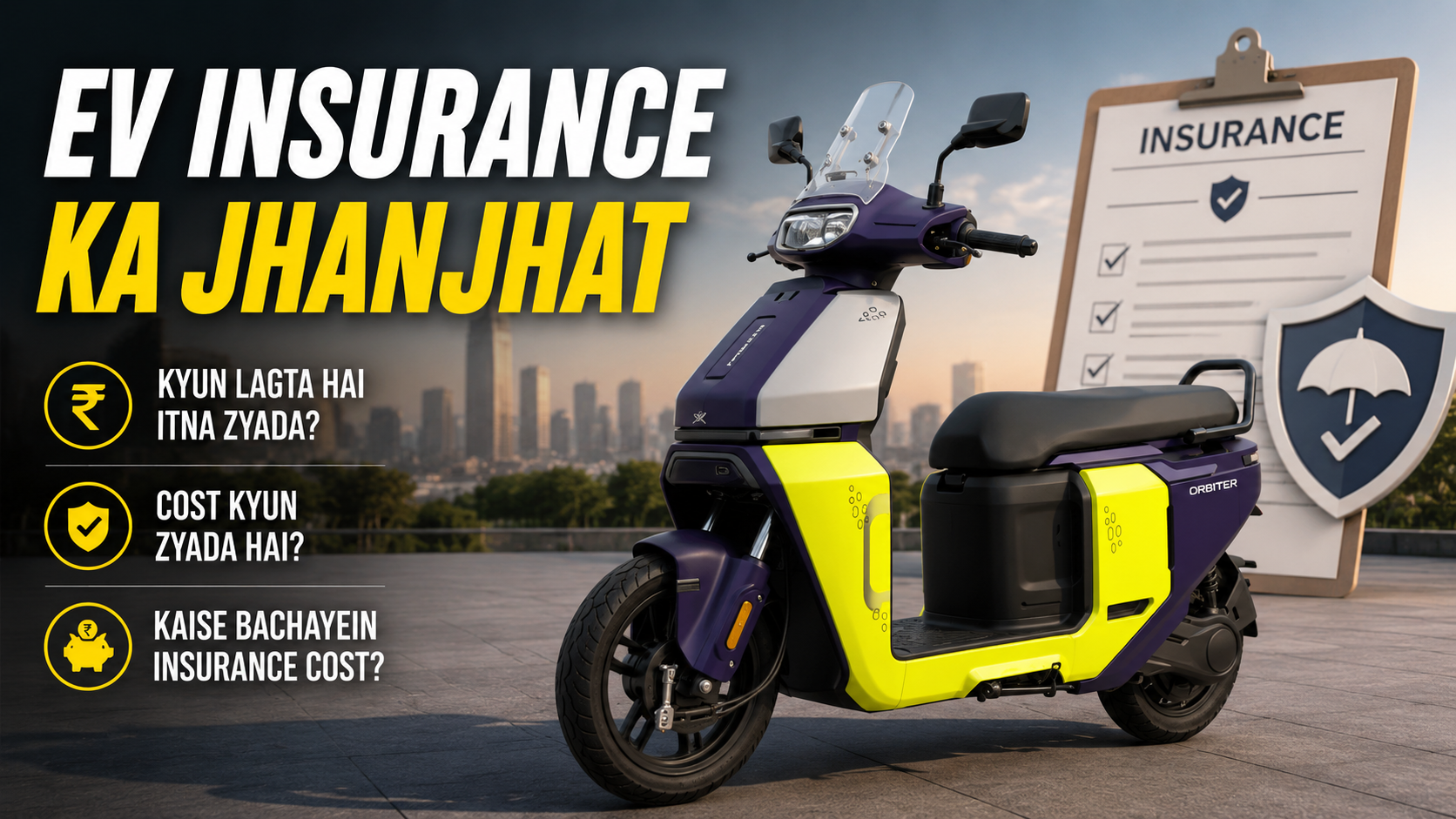
EV Liya Tha Paisa Bachane Ke Liye — Insurance Quote Dekha Toh Paisa Gaya
Scene: Nayi EV delivery ke kuch hafte baad. Pehla saal ka insurance renewal notice aata hai. Amount dekh ke aankhen khuli ki khuli reh jaati hain.
Bhai ne sab calculate kiya tha — fuel saving, maintenance saving, 5 saal mein ₹1 lakh ki bachat. Sab theek tha. Insurance quote mein ₹8,000 extra per year — usse thoda surprise hua tha.
Yeh akele bhai ki kahani nahi hai. India mein lakhs of EV owners ka yahi experience hai. EV kharido toh paisa bachta hai — chalane mein, maintenance mein. Lekin insurance mein? EV own-damage insurance typically 20-40% zyada hoti hai comparable petrol car se.
Kyun? Kya karein? Kaunse add-ons genuinely important hain aur kaunse sirf agent ka commission? Sab kuch aaj seedha baat karte hain.
EV Insurance Mehenga Kyun Hai — 3 Real Reasons
Pehle yeh samjho ki insurance companies pagal nahi hain — inke paas mathematical reasons hain:
Reason 1 — Battery = Car Ki 40-60% Value
Battery pack EV ki total value ka 40-60% hota hai. Matlab agar tumhara Tata Nexon EV ₹17 lakh ka hai — battery akeli ₹6.5-8 lakh ki hai. IDV (Insured Declared Value) mein yeh battery included hoti hai. Jitna bada IDV, utna bada own-damage premium.
Compare karo: Nexon petrol ka IDV ~₹12 lakh. Nexon EV ka IDV ~₹17 lakh. Premium calculation IDV pe based hoti hai — Nexon EV ₹9,388 zyada per year insurance mein padta hai Nexon petrol se.
Reason 2 — Battery Replacement Koi Joke Nahi Hai
EV battery pack costs ₹1-5 lakh mainstream cars ke liye aur ₹8-12 lakh premium models ke liye. Ek chhoti si parking lot dent jo battery casing damage kare — ₹3.5 lakh tak battery replacement trigger ho sakta hai.
Petrol car mein engine replace karna ₹80,000–1.5 lakh. EV mein battery replace karna ₹1–5 lakh. Insurance ka risk calculation accordingly badh jaata hai.
Reason 3 — Specialized Repair = Kam Garages
Specialised repair requirements EVs ki — high-voltage systems, motor diagnostics, BMS issues — har garage nahi kar sakta. Jab claim settlement ke time authorized EV garage dhundha jaata hai, cost higher hoti hai kyunki supply limited hai. Yeh cost ultimately premium mein reflect hoti hai.
Real Premium Numbers — Kya Fark Padta Hai
| Scooter | Base Premium (approx.) | With Key Add-ons |
|---|---|---|
| Ather 450X | ~₹4,500–5,500 | ~₹6,500–8,000 |
| TVS iQube S | ~₹4,000–5,000 | ~₹6,000–7,500 |
| Bajaj Chetak 3503 | ~₹3,800–4,800 | ~₹5,500–7,000 |
| Revolt RVX | ~₹3,200–4,000 | ~₹4,500–6,000 |
| Vida VX2 Plus | ~₹3,500–4,500 | ~₹5,200–6,800 |
Scooter insurance typically ₹2,000–5,000 per year fully comprehensive with add-ons. Petrol scooter se ₹500–1,500 zyada expect karo.
| Car | Base OD Premium | With Must-Have Add-ons |
|---|---|---|
| Tata Nexon EV | ~₹14,000–17,000 | ~₹20,000–25,000 |
| MG Windsor EV | ~₹15,000–18,000 | ~₹22,000–27,000 |
| Tata Punch EV | ~₹10,000–13,000 | ~₹15,000–19,000 |
| Mahindra BE 6 | ~₹22,000–27,000 | ~₹30,000–38,000 |
| Maruti eVitara | ~₹16,000–20,000 | ~₹23,000–28,000 |
Car insurance figures approximate hain — actual quote location, NCB, age, aur insurer pe depend karta hai. Online calculators se exact quote lo.
| Item | EV | Petrol Equivalent |
|---|---|---|
| Third-Party Premium | 15% discount (IRDAI) | Standard rate |
| Own Damage Premium | 20–40% higher | Lower IDV = lower OD |
| Net Annual Difference | ₹3,000–15,000 EV zyada | |
| Battery Replacement Risk | ₹1–8 lakh if uninsured | Engine: ₹80k–1.5L |
| 5-Year Insurance Gap | ₹15,000–75,000 extra total | |
5-year running cost savings (₹90,000–1.1 lakh fuel savings) still outweigh insurance gap — EV TCO better hai overall. Par insurance gap budgeting mein count karna zaroori hai.
Woh Ek Cheez Jo Sab Miss Karte Hain — Zero Depreciation
Standard comprehensive insurance mein battery pe 50% depreciation apply hoti hai claim settlement ke time. Matlab:
- Battery damage hua — replacement cost ₹4 lakh
- Battery 3 saal purani hai — 50% depreciation = ₹2 lakh tumhari jeb se
- Insurance dega sirf ₹2 lakh
Zero Depreciation add-on kya karta hai — battery replacement pe full claim milti hai, depreciation deduct nahi hoti. Zero Dep cost: ₹2,500–6,000 per year. Yeh amount ek baar ki battery claim pe ₹1–2 lakh bachata hai.
EV-Specific Add-Ons — Kaunse Lene Chahiye, Kaunse Nahi
Zero Depreciation — ₹2,500–6,000/year
Must-have. Non-negotiable. Battery pe 50% depreciation waive hoti hai. Without zero dep, 50% depreciation on battery — partial damage claim pe lakhs out of pocket. Kisi bhi EV ke liye first 5 saal mein yeh essential hai. Polar chart mein 9.5/10 — yeh number deserved hai.
Battery Protection Cover — ₹1,500–4,000/year
Strongly recommended. Covers water damage, charging surge, fire, cell degradation claims. Standard policy mein battery cover sirf accident aur fire ke liye hota hai — monsoon mein waterlogging, overcharging spike, aur manufacturing defect ke baad degradation — yeh sab Battery Protection mein covered hota hai. EV ka most expensive component protect karo. 9/10.
Charger / Charging Equipment Cover — ₹500–1,500/year
Recommended. Home wall-box charger ₹15,000–50,000 ki hoti hai — standard motor insurance mein covered nahi hoti kyunki yeh vehicle ka part nahi hai, ghar ki fixed installation hai. Electrical surge, fire, ya theft pe charger lost toh replacement cost khud. ₹500–1,500 mein yeh cover reasonable hai. 7.5/10.
RSA with EV Flatbed — ₹300–800/year
Important — especially for EV cars. EVs cannot be tow-dragged like ICE cars — flatbed tow mandatory hai. Agar regular tow truck aaya aur car drag ki toh drivetrain damage ho sakta hai. EV-specific RSA ensure karta hai ki flatbed aaye. Tata, Mahindra, MG first 3 saal RSA bundle karte hain — unke liye duplicate cost avoid karo. Baaki ke liye add karo. 7/10.
Return to Invoice — ₹1,000–3,000/year
First 2-3 saal ke liye consider karo. Total loss ya theft pe — IDV (depreciated value) ki jagah original invoice value milti hai — registration aur taxes bhi include karke. Pehle 2 saal mein EV ki value tezi se girty hai — RTI ka gap significant hota hai. 3 saal baad skip kar sakte ho. 6/10.
Engine/Motor Protect — ₹1,000–2,500/year
Skip karo mostly. Engine Protection cover ICE cars ke liye design hua tha — hydrostatic lock aur flood damage ke liye. EV mein engine nahi hai — motor hai. Kuch insurers EV motor protection bhi offer karte hain — check karo ki tumhare policy mein standard OD mein motor cover hai ya nahi. Usually hota hai. Agar already covered hai — double pay mat karo. 3/10.
Premium Kaise Bachayein — 7 Practical Tips
Chart ke hisaab se biggest savings:
1. NCB (No Claim Bonus) — Sabse Bada Lever
NCB policy owner ka hota hai, vehicle ka nahi — purani petrol ya diesel car bechke nayi EV lene pe accumulated NCB transfer kar sakte hain. 5 saal bina claim ke NCB 50% tak jaata hai — premium almost half ho jaati hai. Yeh ek genuinely powerful saving hai.
2. Online Directly Khareedna
Agent ke through nahi — insurer ki website ya aggregator (PolicyBazaar, Coverfox, Digit) se directly khareedna typically ₹1,500–3,000 sasta padta hai — agent commission nahi lagti. Same coverage, kam price.
3. Voluntary Deductible Badhao
Higher voluntary deductible choose karo — claim settlement pe tumhara share badhta hai, lekin premium ghatti hai. Agar tum safe driver ho aur chhote claims rarely karte ho — yeh effective saving hai.
4. Telematics-Based Insurance (UBI)
ICICI Lombard aur HDFC ERGO UBI pilot mein hain — early data suggest 12-18% additional discount urban EV buyers ke liye jo 12,000 km se kam chalate hain annually. App-based driving data share karo, safe driving pe discount pao. 2026 mein abhi pilot stage mein hai — 2027 mein mainstream hone ki umeed hai.
5. Chhote Claims File Mat Karo
Minor damage ke liye claim nahi karna chahiye — NCB protect hoti hai aur renewal premium zyada nahi badhti. ₹5,000 ka claim file karo aur ₹8,000 extra premium bharo agale 3 saal. Math karo pehle.
6. Company-Bundled RSA Skip Karo (Agar OEM Already De Raha Ho)
Tata, Mahindra, MG, aur Hyundai sab 24x7 EV-specific RSA free bundle karte hain pehle 3 saal. Is period mein policy se RSA add-on mat lo — duplicate cost hai.
7. Teenon Quotes Compare Karo
Same scooter ya car ka premium alag alag insurers mein ₹2,000–5,000 tak vary karta hai. ICICI Lombard aur Tata AIG battery claims ke liye best reputation rakhte hain currently. HDFC ERGO ka digital claim process fast hai. Quote compare karo — loyalty discount ke chakkar mein same insurer pe mat raho blindly.
Woh Cheezein Jo Agent Nahi Batata
- Home charger standard motor policy mein covered nahi hoti — separate Charger Cover add-on chahiye ya home insurance mein include karo
- Battery warranty ≠ Battery insurance — manufacturer warranty manufacturing defects cover karta hai, insurance accidents aur damage cover karta hai. Dono different cheezein hain
- Cashless garage network check karo pehle — "cashless" policy ka koi matlab nahi agar tumhare area mein authorized EV garage us network mein nahi hai
- IDV negotiate karo — insurers sometimes IDV kam set karte hain — yeh premium kam karta hai lekin total loss claim pe tumhe kam milega. IDV = on-road price minus standard depreciation — confirm karo ki battery value IDV mein include hai
- BaaS wali EV mein kya hoga? — agar MG Windsor ya Maruti eVitara BaaS pe li hai toh battery legally tumhari nahi hai — insurer ko yeh batao, policy accordingly adjust karni padegi
2026 Mein EV Insurance Ka Future — Ek Good News
IRDAI Q4 2026 mein ek separate EV motor insurance product line formalize karne wala hai — jisme battery cover aur charging equipment cover standardize hoga across all insurers. Abhi har insurer ke add-on ka alag naam aur alag terms hain — confusion maximum hai. Standardization aane ke baad comparison aur claim settlement dono easier hoga.
Aur honestly? By May 2026, every major insurer — ICICI Lombard, Bajaj Allianz, HDFC ERGO, Tata AIG and Reliance General — offers a dedicated EV policy with battery protection and charging-equipment coverage built in. Market mature ho raha hai — competition se premiums time ke saath ghatengi.
EV khareedne ki planning mein insurance costs count karna zaroori hai — humara 5-year cost comparison tool mein insurance gap bhi factor in kiya hua hai. Check karo.
Final Summary — Kya Karna Chahiye
| Action | Priority |
|---|---|
| Zero Depreciation add-on lo | 🔴 Must |
| Battery Protection Cover lo | 🔴 Must |
| Online directly compare karo 3 insurers | 🟡 Important |
| Charger Cover lo | 🟡 Recommended |
| NCB transfer karo agar purani car thi | 🟡 Important |
| RSA (agar OEM nahi de raha) | 🟢 Good to have |
| Engine/Motor Protect (agar already covered) | 🔵 Skip |
| Agent se Personal Accident upsell | 🔵 Standalone sasta hai |
EV insurance mehenga hai — par samjhdari se khareedne pe controllable hai. Zero dep + battery cover — yeh do add-ons le lo. Baaki compare karke decide karo. Aur agent ki har baat pe aankhein band karke sign mat karo.
Aur agar EV khareedna hua nahi abhi aur soch rahe ho — EV khareedne se pehle yeh 10 sawaal zaroor puchho — dealer ko bhi, khud ko bhi.
Yeh article April–July 2026 ke insurance industry data, IRDAI guidelines, HonestMoney, MeraEV, aur ev.care ke basis pe likha gaya hai. Premium figures approximate hain — exact quote ke liye apni EV ka model, city, aur NCB history enter karke online calculators use karo.
Compare EV team ka dedicated member. EV industry ka gyaan aur thoda sa roasting — ye unka kaam hai.
💬 Comments (0)
Abhi koi comment nahi. Pehle comment karo! 👇
💬 Apni Raay Do